In regulated fitness and performance environments, interest in hgh supplements and related hormone-support compounds continues to intersect with evolving standards around sourcing, compliance, and product quality. Athletes, trainers, and researchers increasingly emphasize the importance of transparency, proper handling, and adherence to applicable guidelines when evaluating such compounds. Within this context, Domestic Supply operates as a US-based online supplier offering a range of products including anabolic steroids, post-cycle therapy (PCT) formulations, peptides, SARMs, and HGH supplements. The platform presents access to these categories within a structured, compliance-aware supply framework, where sourcing practices and product consistency remain key considerations for informed procurement and responsible use.
Performance-enhancing compounds refer broadly to a category of substances that are studied and utilized within athletic, fitness, and hormone-related protocols to support structured training or research objectives. These compounds may include anabolic agents, hormone-related products, and ancillary formulations that are typically handled within regulated or medically supervised environments, depending on jurisdiction. Their role is often contextual, forming part of broader regimens designed by qualified professionals or examined in controlled research settings. Access to such compounds through platforms like Domestic Supply is presented on a product-availability basis, where items are categorized and listed for procurement without reference to specific outcomes, protocols, or individualized usage guidance.
Regulatory Awareness
Distribution of pharmaceutical and performance-related compounds is subject to jurisdictional laws, including prescription requirements and controlled substance classifications. Suppliers operate within these frameworks to align with applicable regulations.
Product Categorization
Compounds are typically organized into distinct groups such as anabolic steroids, post-cycle therapy (PCT) products, peptides, SARMs, and topical gels, allowing for clear differentiation across product types.
Supply Integrity
Operational considerations include sourcing practices, inventory handling, and order fulfillment processes. Domestic Supply presents these elements through structured product listings and standardized order workflows, supporting consistency in how products are accessed and distributed.
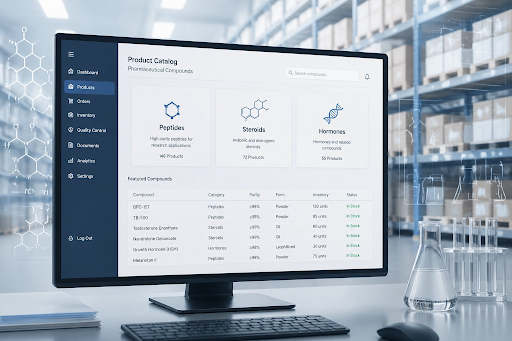
The Domestic Supply platform is structured around several functional components that support product access and order management. An online catalog organizes available items into clearly defined categories, enabling users to navigate products such as peptides, SARMs, and HGH-related formulations, including Somatropin. Order processing systems facilitate transaction handling, from product selection through checkout, while tracking mechanisms provide visibility into order status after submission. In addition, distribution and warehouse processes underpin the handling and dispatch of products, reflecting logistical coordination behind the platform. These components collectively define how the platform operates at a systems level, focusing on accessibility and process flow rather than performance-related claims.
Domestic Supply is a US-based online supplier operating within the niche of pharmaceutical and performance-related compound distribution. The platform provides access to a range of categorized products, including anabolic steroids, peptides, SARMs, post-cycle therapy (PCT) formulations, and hgh supplements, as presented on its website. Its operational model centers on maintaining an accessible online catalog supported by structured ordering and fulfillment systems. The company’s positioning reflects a focus on product availability and classification rather than direct consumer guidance or advisory services. By organizing compounds into clearly defined categories and maintaining standardized processes for ordering and distribution, Domestic Supply aligns its activities with a systemized supply approach. The platform functions as an intermediary point of access within a broader landscape that includes regulatory oversight, medical supervision, and research-driven use of such compounds.
Domestic Supply organizes its inventory into distinct product categories that reflect common classifications within pharmaceutical and performance-related compound distribution. These include injectable and oral anabolic steroids, which differ in administration format and are typically grouped accordingly within the catalog. Post-cycle therapy (PCT) products are listed separately to distinguish their role within structured protocols. Additional categories such as peptides, SARMs, and transdermal gels are also presented, each reflecting different formulation types and delivery methods. Products are accessed through an online interface where items are sorted by category, compound type, and format, allowing users to navigate based on specific requirements. This structured categorization supports clarity in product identification while maintaining a standardized system for browsing and selection.
Peptides represent one of the product categories available through the Domestic Supply platform, typically defined by their short-chain amino acid structure and classification within research and compound supply contexts. These products are generally presented in formats such as vials or lyophilized powders, reflecting standard handling and storage practices associated with peptide compounds. Within the platform, peptide listings are organized alongside relevant product details, enabling differentiation by compound type and format without extending into application-specific guidance. Availability is framed through catalog access, where each item is positioned as part of a broader inventory of categorized compounds. This approach reflects a datasheet-style presentation, focusing on identification, classification, and procurement context rather than comparative positioning or functional outcomes.
Product Selection and Categorization
Users access products through an organized online catalog, where items are grouped by category such as steroids, peptides, SARMs, and PCT formulations. This structure enables navigation based on compound type and format.
Ordering and Prescription Considerations
Depending on jurisdiction, certain compounds may be subject to prescription requirements or legal restrictions. The platform presents products in a manner that reflects availability while acknowledging that regulatory obligations vary by location.
Fulfillment and Delivery Processes
Once an order is placed, internal systems manage processing and dispatch. This includes order confirmation, packaging, and shipment through established distribution channels. The process is structured to provide visibility into order progression without reference to timelines or delivery guarantees.
Products available through Domestic Supply are positioned within a range of environments where structured compound use may occur under defined conditions. In athletic and bodybuilding contexts, such compounds are often referenced as part of broader training frameworks, typically overseen by experienced practitioners or subject to organizational guidelines. Within fitness and physique-focused programs, compounds may be considered in relation to regimented approaches that incorporate multiple variables beyond product selection alone.
In hormone-related protocols, usage is generally associated with medically supervised environments where licensed professionals determine appropriate applications in accordance with regulatory standards. Additionally, certain compounds are distributed within research or controlled settings, where they may be examined under specific conditions or institutional oversight. Across these contexts, the emphasis remains on how products are situated within structured environments, rather than on outcomes or individual experiences. Domestic Supply functions as a point of access within this broader landscape, where product categorization aligns with varied use-case environments.
The distribution and use of pharmaceutical and performance-related compounds involve multiple regulatory and handling considerations that vary by jurisdiction. Certain products listed by Domestic Supply may fall under prescription-only classifications or controlled substance regulations, requiring adherence to local legal frameworks prior to procurement or use. Proper storage and handling practices are typically expected to maintain product integrity, including considerations related to temperature, packaging, and transport. In this context, hgh supplements and similar compounds are positioned within a regulated supply environment where sourcing and distribution reflect awareness of applicable laws. Domestic Supply presents its catalog within this framework, emphasizing product availability while acknowledging that compliance responsibilities remain with the purchaser and relevant oversight bodies.
Domestic Supply’s platform is structured to support straightforward navigation and ordering logistics through a categorized online interface. Website usability centers on organized product listings, allowing users to browse compounds by type and format within a consistent layout. The system aligns with general customer workflows by enabling product selection, cart management, and checkout within a single environment. Order tracking features provide visibility into purchase status following submission, supporting transparency in the fulfillment process. In addition, platform-based communication and support mechanisms are positioned to address order-related inquiries within the scope of standard e-commerce operations.
What standards are typically referenced when assessing the integrity of products like Somatropin HGH listed on supply platforms?
Product integrity is generally associated with manufacturer sourcing, labeling transparency, and batch identification where available. Platforms present compounds based on supplier-provided specifications, allowing users to evaluate origin and consistency within the scope of publicly listed product information.
Why do peptide and hormone-based compounds often require controlled storage conditions?
Many peptide and hormone-related compounds are sensitive to environmental factors such as temperature, moisture, and light exposure. Standard handling practices typically involve stable, cool storage environments to maintain structural consistency during storage and prior to reconstitution or use.
How are hormone-related compounds typically classified under regulatory frameworks?
Hormone-related compounds may fall under prescription-only or controlled substance classifications depending on jurisdiction. Regulatory frameworks define how these products can be distributed, possessed, or used, requiring adherence to local laws and, in some cases, medical authorization.
What distinguishes peptide-based compounds from anabolic steroid categories in supply catalogs?
Peptides are generally categorized by their amino acid structure and are often presented in lyophilized or injectable formats, whereas anabolic steroids are synthetic derivatives typically classified by androgenic properties and offered in oral or injectable forms.
How do supply platforms handle packaging and shipment for regulated compounds?
Packaging and shipment processes are typically designed to align with standard logistics practices, including secure packing, labeling discretion, and coordination with shipping carriers. Fulfillment workflows focus on maintaining product condition and ensuring order tracking visibility.
What should users expect when navigating and ordering through an online compound catalog?
Users typically interact with categorized product listings, selecting items based on compound type and format. The ordering process includes cart management, checkout procedures, and confirmation steps, with tracking systems providing updates after the order is processed.
Why is product categorization important for users selecting specific compound types?
Categorization allows users to distinguish between compound classes such as peptides, SARMs, and ancillary products. This structure supports informed selection by organizing products according to formulation, delivery method, and general classification without implying usage outcomes.
As regulatory frameworks, sourcing standards, and digital access models continue to evolve, platforms such as Domestic Supply remain positioned within a broader infrastructure that connects product availability with structured distribution systems. The organization’s catalog-based approach reflects ongoing alignment with classification, logistics, and access considerations relevant to pharmaceutical and performance-related compounds. In this context, hgh supplements and similar product categories are presented within defined parameters that emphasize transparency in listing and consistency in process. The role of such platforms remains tied to facilitating access within legally and operationally established boundaries, where responsibility for use, oversight, and compliance is distributed across practitioners, researchers, and regulatory authorities.