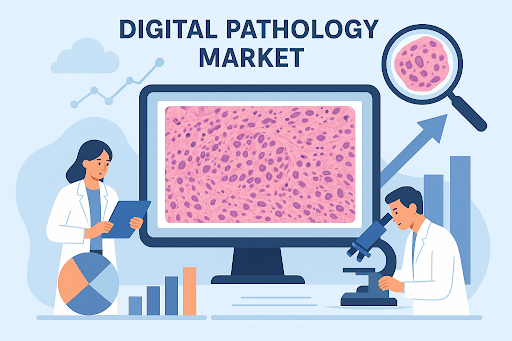
The global digital pathology market, once a slow-moving adjunct to traditional microscopy, is now in the midst of a transformative boom. Driven by the urgent need for diagnostic efficiency, the explosive potential of artificial intelligence (AI), and a frenetic pace of mergers and acquisitions, the industry is on a steep growth trajectory that is fundamentally altering how diseases are diagnosed and treated. No longer confined to research and niche applications, digital pathology is moving decisively into clinical workflows, promising a future of faster, more accurate, and collaborative patient care.
The numbers tell a compelling story. According to SNS Insider, The Digital Pathology Market size is expected to reach USD 2.92 billion by 2032 from USD 1.01 billion in 2023, and grow at a CAGR of 12.54% over the forecast period 2024-2032. This impressive growth is underpinned by several powerful catalysts. The chronic global shortage of pathologists, particularly acute in certain regions, has created a pressing demand for tools that enhance productivity. Digital slides can be accessed remotely, enabling telepathology and workload balancing across networks. Furthermore, the backlog in cancer diagnostics exacerbated by the COVID-19 pandemic highlighted the critical need for streamlined, digitized processes to reduce turnaround times.
However, the true game-changer is the integration of sophisticated AI and machine learning algorithms. Today’s digital pathology platforms are evolving from mere image viewers into powerful diagnostic assistants. AI algorithms are being trained to identify patterns, count cells, detect micrometastases, and quantify biomarkers with superhuman consistency and speed. This is accelerating areas like drug development, where pharmaceutical giants are leveraging digital pathology to analyze tissue samples from clinical trials with unprecedented granularity, seeking robust biomarkers of drug efficacy and safety.
“We are no longer just digitizing glass slides; we are creating queryable, analyzable data from human tissue,” says Dr. Anya Sharma, a pathologist and consultant for a leading healthcare tech firm. “The value proposition has shifted from simple archiving to actionable intelligence. An AI-powered scan can flag a region of interest for a pathologist, potentially catching subtle signs of disease that might be missed in a manual review, and doing so in a fraction of the time.”
This high-stakes, high-growth environment has triggered a wave of strategic consolidation, as established med-tech titans and agile software specialists jockey for position. The Mergers and Acquisitions (M&A) landscape has been particularly heated. In recent years, we have seen blockbuster deals like Philips’ acquisition of Patholgy (now Philips Digital Pathology Solutions) and Roche’s purchase of Ventana Medical Systems, which gave it a strong foothold in both staining instruments and digital imaging. More recently, the trend has involved larger companies snapping up pure-play AI startups to bolt-on advanced capabilities.
For instance, in 2023, Danaher Corporation (through its subsidiary Leica Biosystems) acquired Proscia, a leader in AI-powered digital pathology software, for a sum reported to be near $200 million. This followed Proscia’s successful deployment of its Concentriq platform in large-scale laboratory networks. Similarly, other AI-focused firms like Paige and PathAI have attracted massive investment—Paige secured $100 million in funding and later went public via SPAC, while PathAI has partnered extensively with pharma and biotech companies, validating the commercial demand for AI-driven pathology insights.
The “top players” in this arena can now be segmented into distinct camps:
· Integrated Imaging Giants: Philips, Roche (Ventana), and Danaher (Leica Biosystems) offer end-to-end ecosystems from slide scanners and stainers to enterprise software and, increasingly, AI applications.
· Specialized Scanner Manufacturers: 3DHISTECH and Hamamatsu Photonics remain powerhouses in high-throughput and high-resolution scanning hardware.
· Software & AI Natives: Companies like Proscia, Paige, PathAI, and Indica Labs are driving innovation in cloud-based platforms and algorithm development, often partnering with or being acquired by the hardware giants.
· Pharma & Biotech Allies: Nearly every major pharmaceutical company is now a client and collaborator, using digital pathology as a critical tool in translational research and clinical development.
The influx of venture capital and strategic investment into this space has been staggering. In the past five years alone, over $2 billion in private funding has flowed into digital pathology and AI pathology companies, according to recent market analyses. Investors are betting that the digitization of pathology will follow a trajectory similar to that of medical imaging, where PACS systems became indispensable, but with an added, lucrative layer of AI-driven analytics.
Despite the bullish outlook, the path forward is not without challenges. Significant hurdles remain, including the high upfront cost of scanning infrastructure, interoperability issues between different vendors’ systems, complex data storage and security requirements, and the critical need for regulatory frameworks to keep pace with AI algorithm validation and approval. The FDA has begun clearing more AI-powered pathology tools, but establishing standardized guidelines for clinical use is an ongoing process.
Nevertheless, the momentum is undeniable. As healthcare systems worldwide strive for precision medicine and operational efficiency, digital pathology stands as a pivotal technology. From enabling a specialist in New York to consult on a rare case from a clinic in rural India, to allowing an algorithm to pre-screen thousands of biopsy slides for signs of prostate cancer, the market’s journey to nearly $3 billion is more than a financial statistic—it’s a roadmap for the future of diagnostics. The race is on, and the winners will be those who can most seamlessly integrate cutting-edge hardware, intuitive software, and clinically validated AI to deliver tangible improvements in patient outcomes.