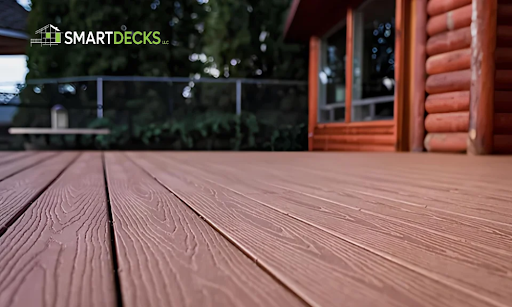
When a deck starts showing visible wear, the first question most homeowners ask is whether they can save money by resurfacing rather than replacing it. If you need deck repair in Auburn, WA, the answer depends on the structural condition of what is already there. Resurfacing costs significantly less than full replacement, but only when the substructure is still sound.
Applying new surface boards over a compromised frame accelerates failure and creates safety risks that outweigh any short-term savings. SmartDecks has assessed hundreds of aging decks across King and Pierce Counties, and the distinction between a resurfaceable deck and one that needs full replacement comes down to a specific set of structural indicators.
Contents
- 1 What Deck Resurfacing Actually Involves
- 2 What Full Replacement Actually Involves
- 3 The Structural Tests That Determine Your Path
- 4 How the Pacific Northwest Climate Accelerates Decay
- 5 When Resurfacing Makes Financial Sense
- 6 When Replacement Is the Only Responsible Option
- 7 Getting an Accurate Assessment
What Deck Resurfacing Actually Involves
Resurfacing replaces the visible surface layer of a deck without disturbing the substructure. The existing decking boards are removed. The framing, posts, beams, ledger board, and footings remain in place. New boards are installed on the existing frame.
The scope of a resurfacing project typically includes:
- Removal and disposal of existing decking boards
- Inspection of joists, beams, and ledger for rot or structural damage
- Replacement of any individual damaged framing members found during inspection
- Installation of new decking boards in the chosen material
- Re-installation or replacement of railing systems if needed
A standard resurfacing project on a 300 to 400 square foot deck in the Auburn area runs approximately $4,000 to $8,000 depending on material choice. That is materially less than a full replacement, which includes demo of the entire structure, new footings, new framing, and new surface boards.
What Full Replacement Actually Involves
Full deck replacement means removing everything down to grade, including the footings in many cases, and building a new structure from scratch. This is the right call when the substructure has sustained damage that resurfacing cannot address.
Full replacement costs in King and Pierce Counties typically range from $15,000 to $35,000 for a mid-size residential deck, depending on size, elevation, material, and complexity. The higher cost reflects the full scope of labor: demolition, haul-away, footing excavation, concrete work, framing, and surface installation. It also triggers a full permit review and multiple inspections, which adds time to the project timeline.
The National Association of Realtors Research Group reported in its Remodeling Impact Report that a new wood deck with an estimated construction cost of $10,000 recovers approximately 80 cents on the dollar at resale. Composite deck projects show similar recovery rates. Full replacement, while more expensive, adds documented structural value that resurfacing alone does not.
The Structural Tests That Determine Your Path
Before any cost comparison matters, the substructure must be evaluated. A qualified contractor performing deck repair in Auburn, WA uses a set of physical tests to assess framing condition.
Key assessment indicators include:
- Probe test: A screwdriver or awl pushed into joist wood with light hand pressure should not penetrate more than 1/4 inch. Deeper penetration signals rot.
- Ledger check: The board connecting the deck to the house must be firmly attached with no separation, staining, or soft spots. Ledger failure is the primary cause of deck collapses nationally.
- Post base condition: Metal post bases corrode at ground contact points. Corrosion that has compromised the base plate requires full post and footing replacement.
- Beam deflection: Visible sag in beams under normal load indicates section loss from decay or insect damage.
- Joist hanger integrity: Galvanized joist hangers corrode over time in wet climates. Hangers showing heavy rust or deformation compromise load transfer.
If more than 20 percent of the framing members fail these tests, full replacement is typically more cost-effective than piecemeal repairs combined with resurfacing.
How the Pacific Northwest Climate Accelerates Decay
Auburn, WA receives between 38 and 44 inches of rain annually. Decks in this climate face sustained moisture exposure that accelerates the biological decay process in wood framing. The U.S. Forest Products Laboratory classifies the Pacific Northwest as a high decay hazard zone, where untreated wood in ground contact or persistent moisture contact has a service life of two to five years before structural degradation begins.
Pressure-treated lumber rated for above-ground use carries an ACQ retention level of 0.15 pounds per cubic foot. Ground-contact rated lumber uses a retention level of 0.40 pounds per cubic foot. Deck posts installed directly in soil without proper post bases frequently receive above-ground rated lumber, which underperforms in that application and degrades faster than expected. This specific installation error is common on decks built before 2004, when ACQ treatment became the standard replacement for CCA-treated lumber.
When Resurfacing Makes Financial Sense
Resurfacing makes sense when the deck frame was built with properly rated lumber, installed with correct fasteners and connectors, and has been maintained reasonably well. A 10 to 15 year old deck with surface board weathering but solid framing is a strong candidate for resurfacing.
The cost difference is substantial. Resurfacing a 350 square foot deck with composite boards typically costs $5,000 to $9,000. Full replacement of the same deck runs $18,000 to $28,000. The savings from resurfacing a structurally sound deck can exceed $15,000. That savings only materializes when the frame assessment confirms the substructure is genuinely sound, not when resurfacing is chosen to avoid the cost of replacement on a deck that actually needs it.
When Replacement Is the Only Responsible Option
There are conditions where resurfacing is not appropriate regardless of cost:
- Footings that have shifted, heaved, or cracked no longer provide adequate bearing capacity
- A ledger board with hidden rot behind the flashing presents a collapse risk that new surface boards do not address
- Posts with base corrosion or ground contact rot cannot safely carry the deck load
- Joist spans that were originally undersized for the deck’s load requirements need to be corrected at the framing level
SmartDecks performs a full structural assessment before recommending any repair path for deck repair in Auburn, WA. No resurfacing project is quoted without first confirming the frame will support the new surface material safely.
Getting an Accurate Assessment
SmartDecks provides free on-site assessments for homeowners in Auburn, Kent, Renton, and surrounding areas. The team brings over 30 years of experience evaluating deck condition across the full range of Western Washington climate conditions.
Their residential decking services cover everything from targeted board replacement to full structural rebuilds, with written quotes and transparent pricing at every scope level. Call (253) 453-5494 to schedule a structural assessment and get a clear answer on whether your deck needs resurfacing or full replacement.